
Lucid AI API costs: budget for accepted work, not just tokens
Use a transparent hypothetical model to estimate inference, retries, review, storage, and multi-step workflow costs without invented vendor prices.
LUCID API LAB / TOPIC THREAD
Plan for the interrupted path.
Reliability is the behavior a person experiences when the happy path breaks. This collection examines timeouts, retries, asynchronous jobs, quality checks, bounded resource use, and test cases that deliberately interrupt a workflow. It keeps transport success distinct from an accepted result.
Start with the integration article and test its uncertain timeout case with a fake provider. Add a source revision change, a deleted entry, and a cancelled job. Then connect content acceptance to model evaluation and cost planning. A workflow that stops safely can be behaving correctly, while a seemingly successful response may still violate the task or expose stale information.
Field guides following
the reliability thread.
Use a transparent hypothetical model to estimate inference, retries, review, storage, and multi-step workflow costs without invented vendor prices.
Build a layered test suite that checks schema meaning, ownership, model adapters, asynchronous state, and user-visible outcomes.
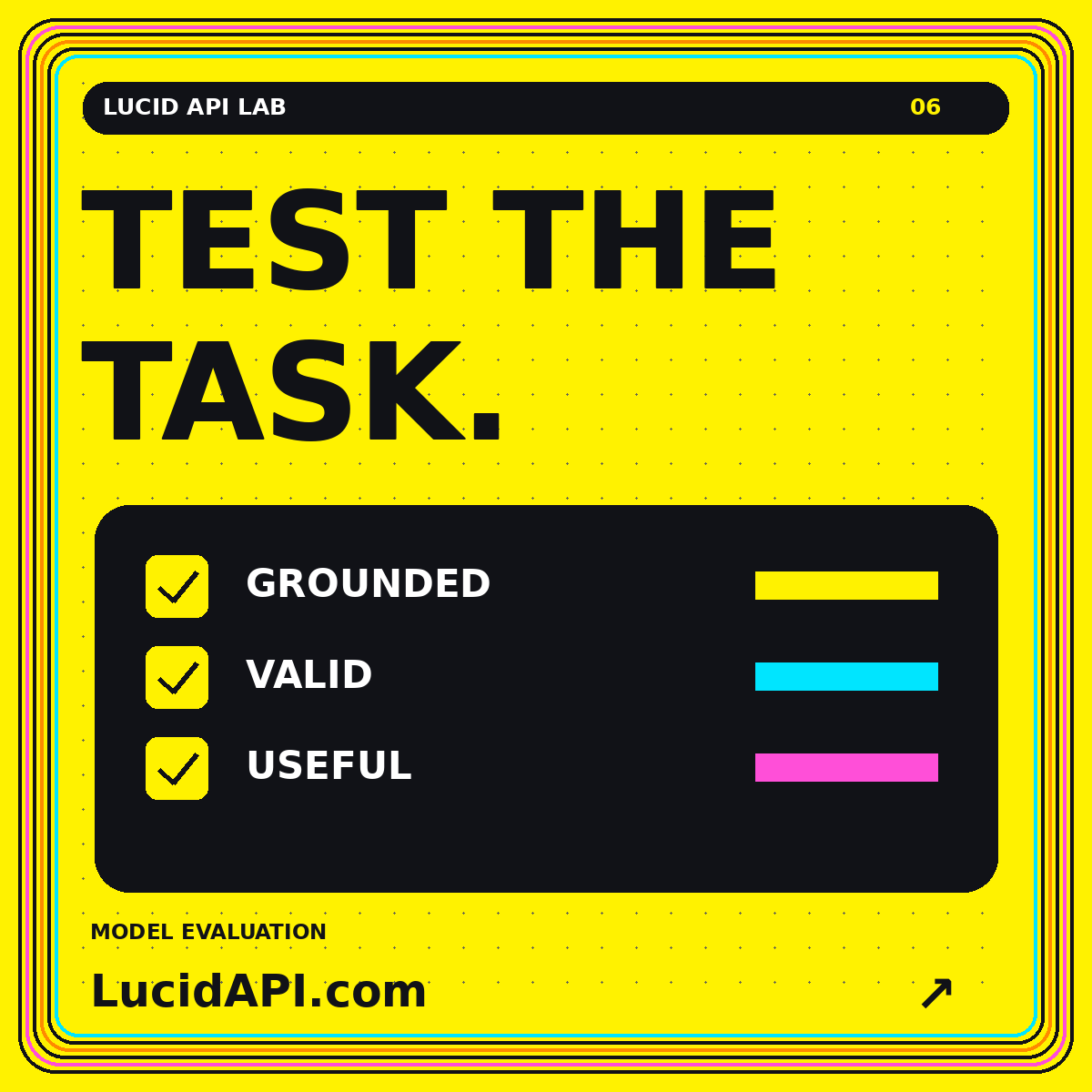
Create a small, repeatable evaluation set for faithful summaries, structured extraction, uncertainty handling, and operational fit.
An evidence-aware event model for teams documenting dream reports, experimental cues, observations, and uncertain classifications.
Design a recoverable model-integration boundary with bounded retries, explicit job states, output validation, and useful telemetry.