Lucid AI API costs: budget for accepted work, not just tokens
Use a transparent hypothetical model to estimate inference, retries, review, storage, and multi-step workflow costs without invented vendor prices.
LUCID API LAB / CATEGORY
Useful capability, with a defined perimeter.
This collection connects model selection, tool use, and the cost of completing useful work. A model configuration can produce an attractive demonstration without meeting the requirements of a particular application. An agent can generate an impressive final answer while taking actions that were never permitted. Evaluate both the content and the path used to produce it.
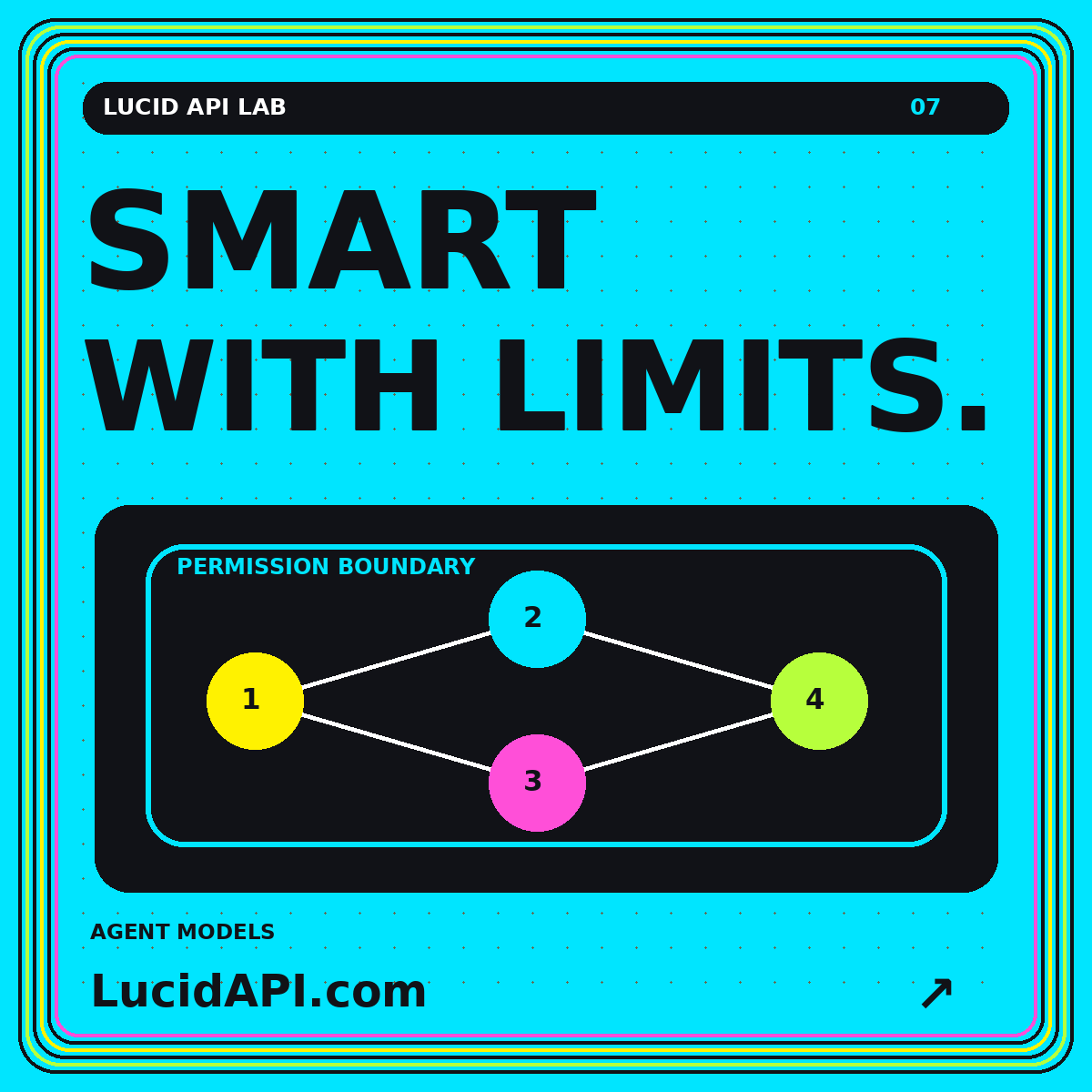
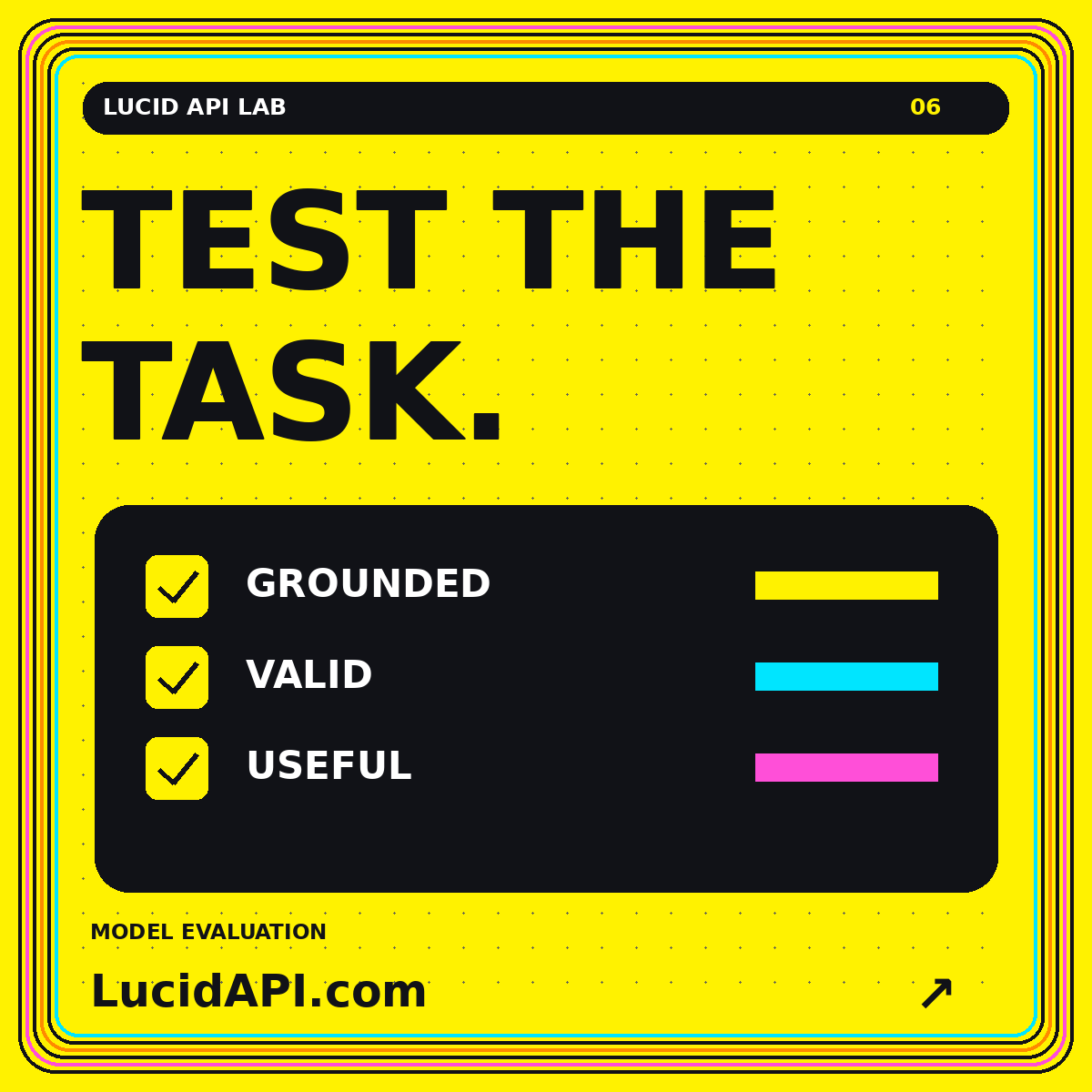
Begin with the model-evaluation guide to write a task contract and create a small, varied set of test cases. The bounded-workflow article then asks whether that task needs an agent at all. Many early features are clearer as fixed sequences with narrow inputs, validated outputs, and a review step.
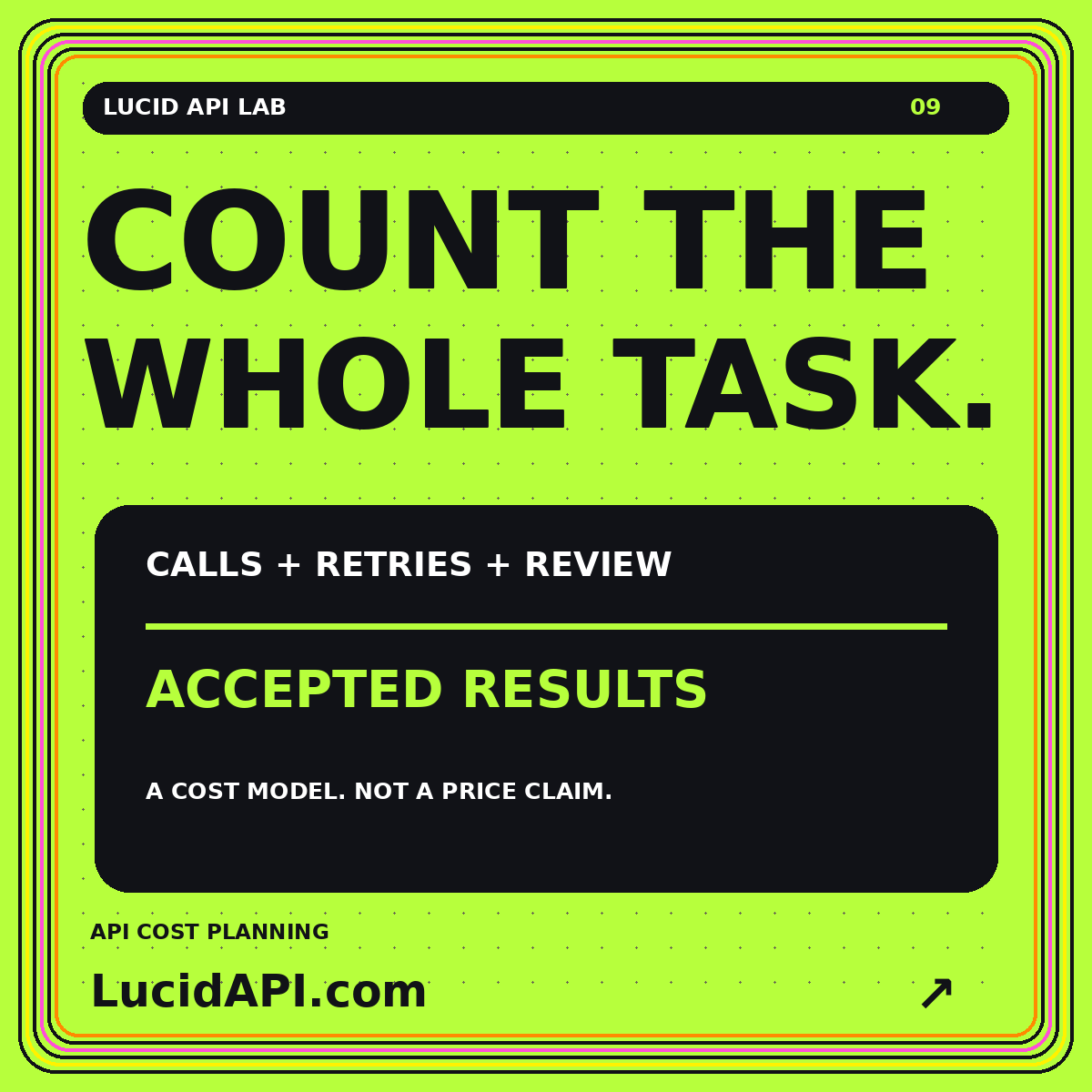
Use the cost-planning guide after the workflow has a defined ending. Count retries, context growth, rejected results, and review effort instead of comparing only the price of one call. Its numbers are hypothetical examples, not current service quotations.
Keep release decisions specific to the tested task, dataset, and configuration. This collection does not rank vendors or claim universal superiority for a model family. It provides a way to make a narrower, explainable decision about what an implementation may do, how it stops, and what evidence supports introducing it to users.
Complete guides.
A connected line of inquiry.
Use a transparent hypothetical model to estimate inference, retries, review, storage, and multi-step workflow costs without invented vendor prices.
Choose between a fixed workflow and model-directed actions, then define tool permissions, approval points, stop rules, and recoverable state.
Create a small, repeatable evaluation set for faithful summaries, structured extraction, uncertainty handling, and operational fit.