Testing Lucid API workflows: contracts, fixtures, and failure cases
Build a layered test suite that checks schema meaning, ownership, model adapters, asynchronous state, and user-visible outcomes.
LUCID API LAB / TOPIC THREAD
Make the contract readable.
API design connects the shape of a request to the behavior a client can rely on. These articles cover resource boundaries, journal schemas, access control, error recovery, and testing. Start with the architecture guide, then follow the examples into a single end-to-end workflow.
A useful review question is simple: can two developers independently explain the same failure outcome? If one expects a saved record and the other expects a rolled-back operation, the contract still contains an ambiguity. Use the schema and testing guides to resolve it before adding more endpoints. Proposed fields are examples, not a deployed platform specification.
Field guides following
the api design thread.
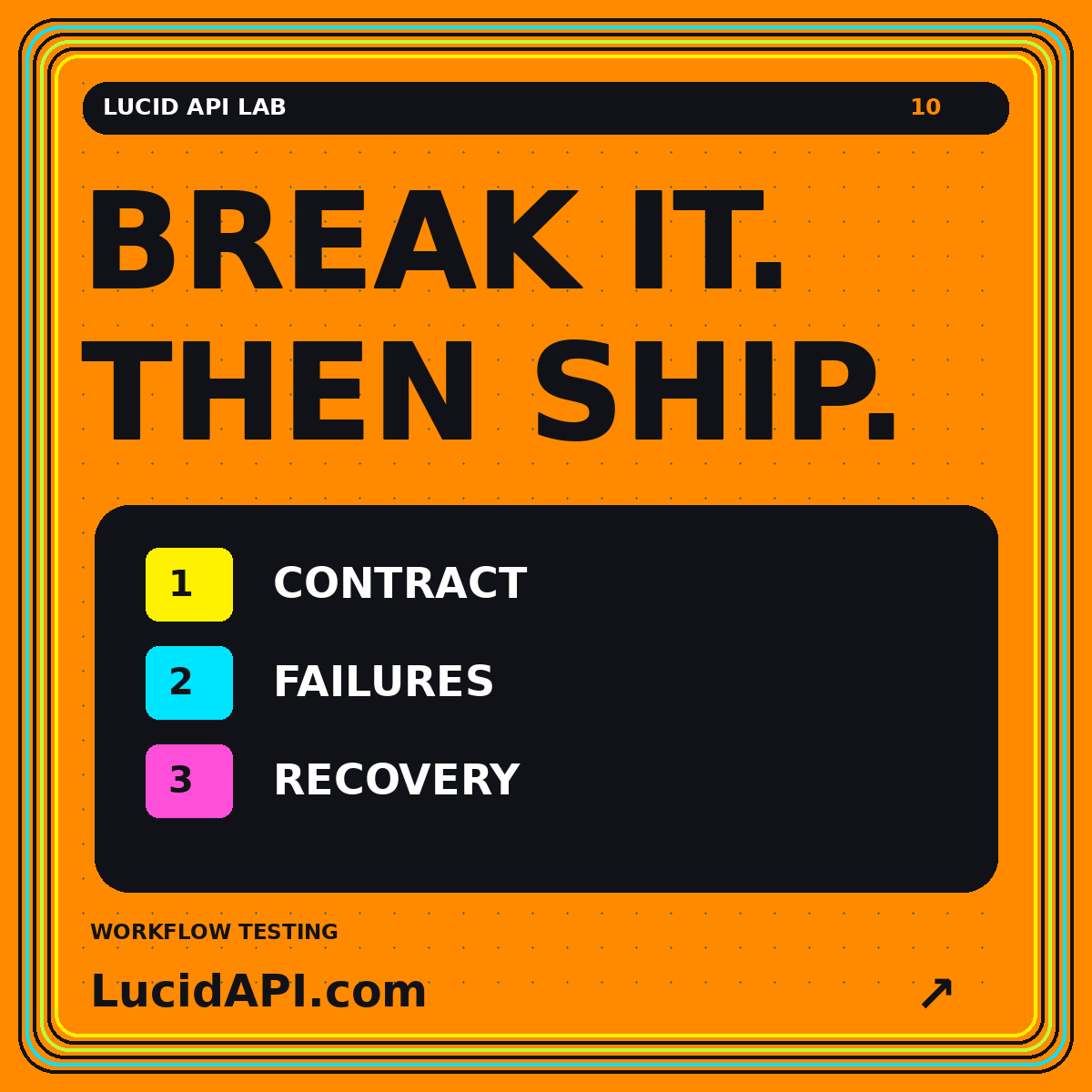
Build a layered test suite that checks schema meaning, ownership, model adapters, asynchronous state, and user-visible outcomes.
A practical threat-modeling guide for journal records, generated summaries, exports, background jobs, and administrative access.
Design a recoverable model-integration boundary with bounded retries, explicit job states, output validation, and useful telemetry.
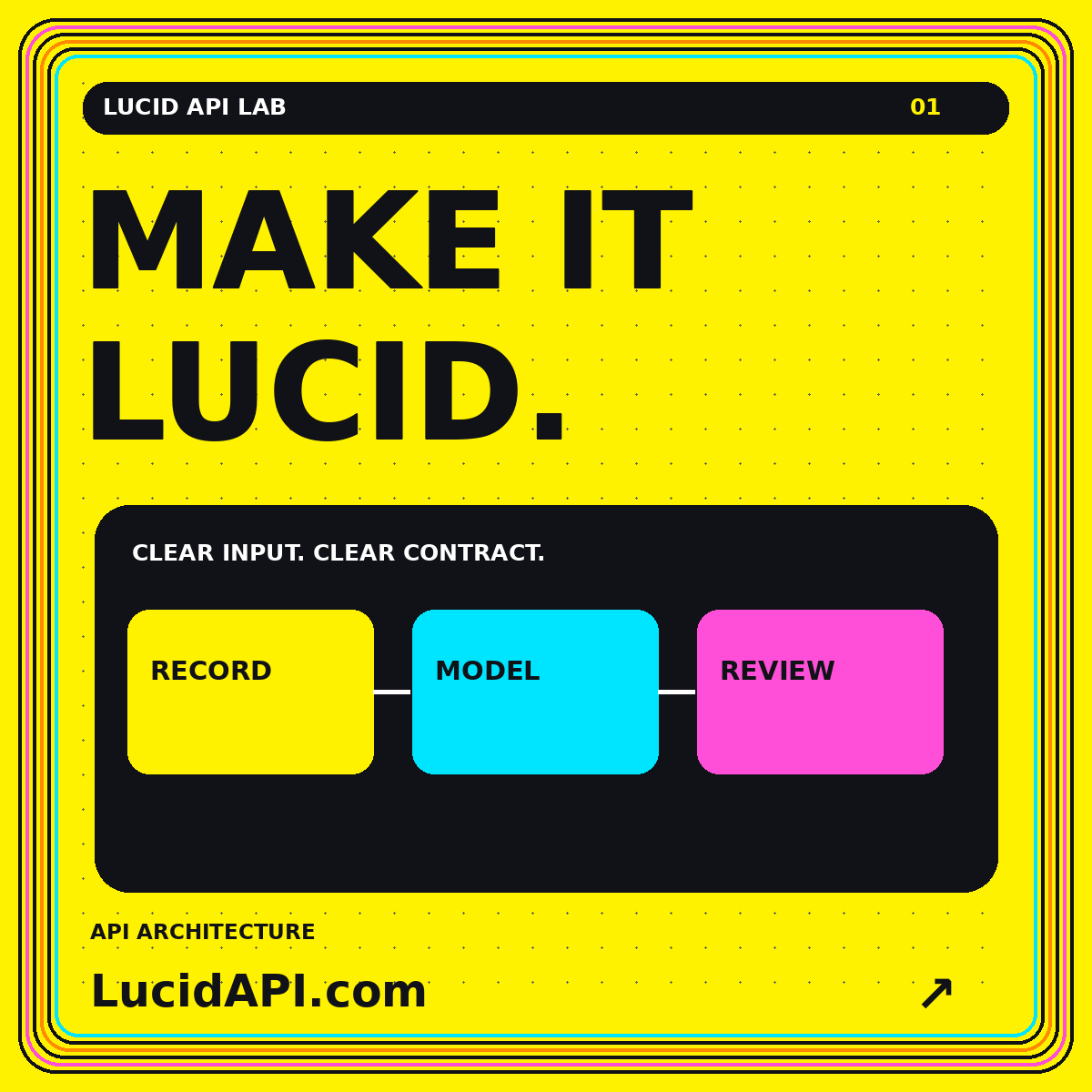
A practical starting point for separating dream records, AI transformations, and agent actions into an understandable API.
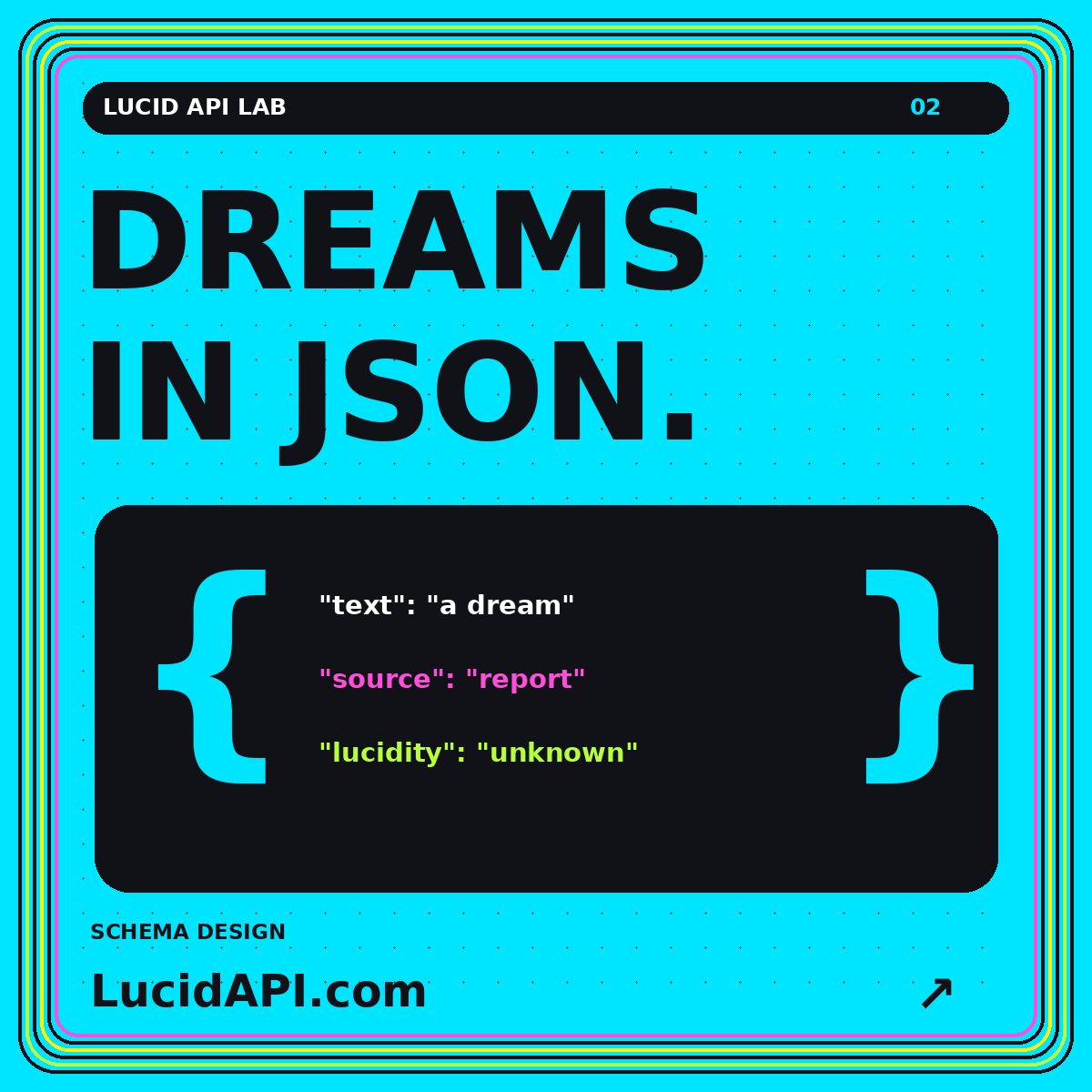
Model dream reports, revisions, consent choices, and generated annotations without turning missing information into false certainty.