Lucid Dreaming API design: separate research signals from self-reports
An evidence-aware event model for teams documenting dream reports, experimental cues, observations, and uncertain classifications.
LUCID API LAB / CATEGORY
Preserve the account. Respect the evidence.
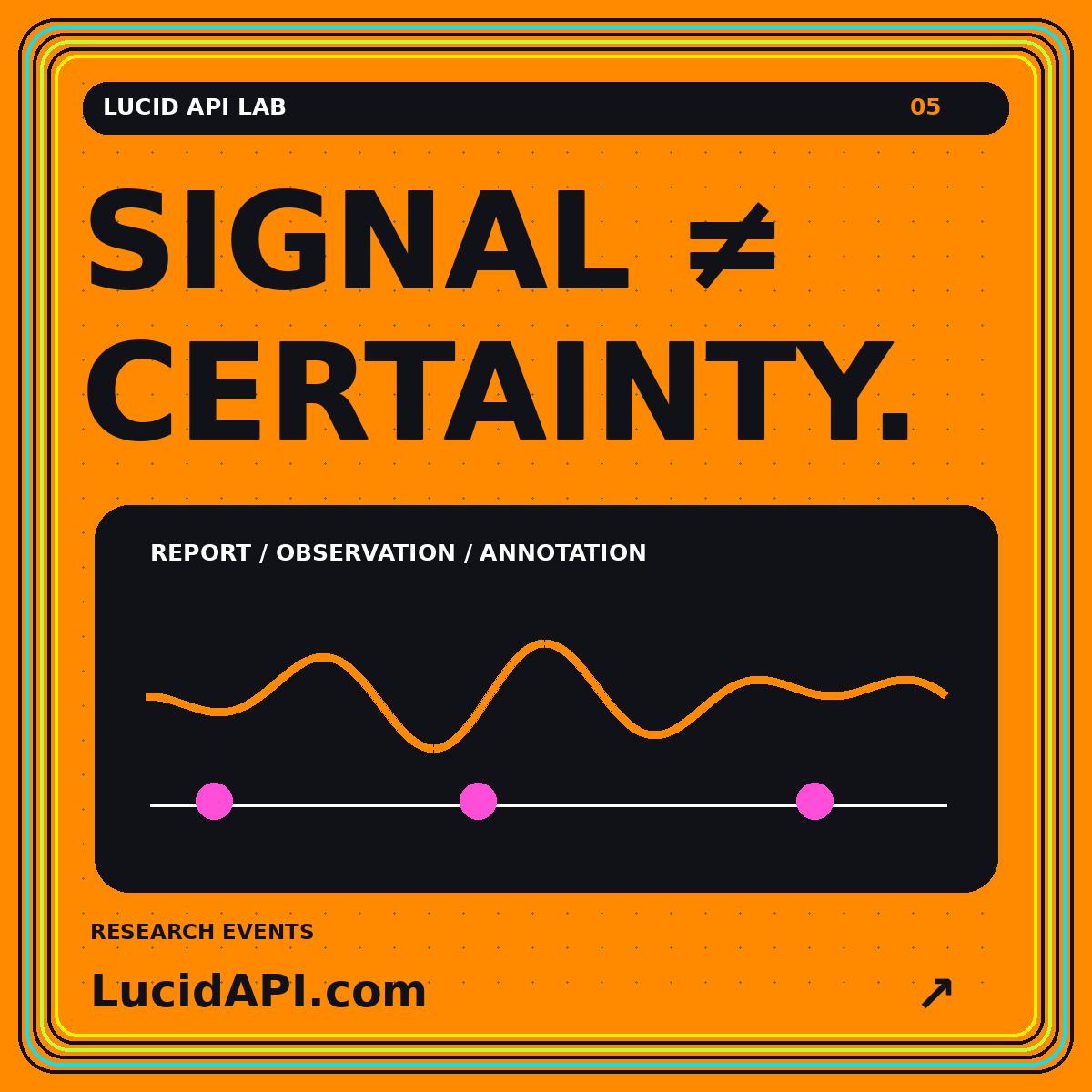
Dream intelligence brings together two related but different design problems: working with a person's written account and representing observations from a research context. A summary of a journal is derived text. A device event is a record from a collection process. Neither should silently acquire the certainty or authority of the other.
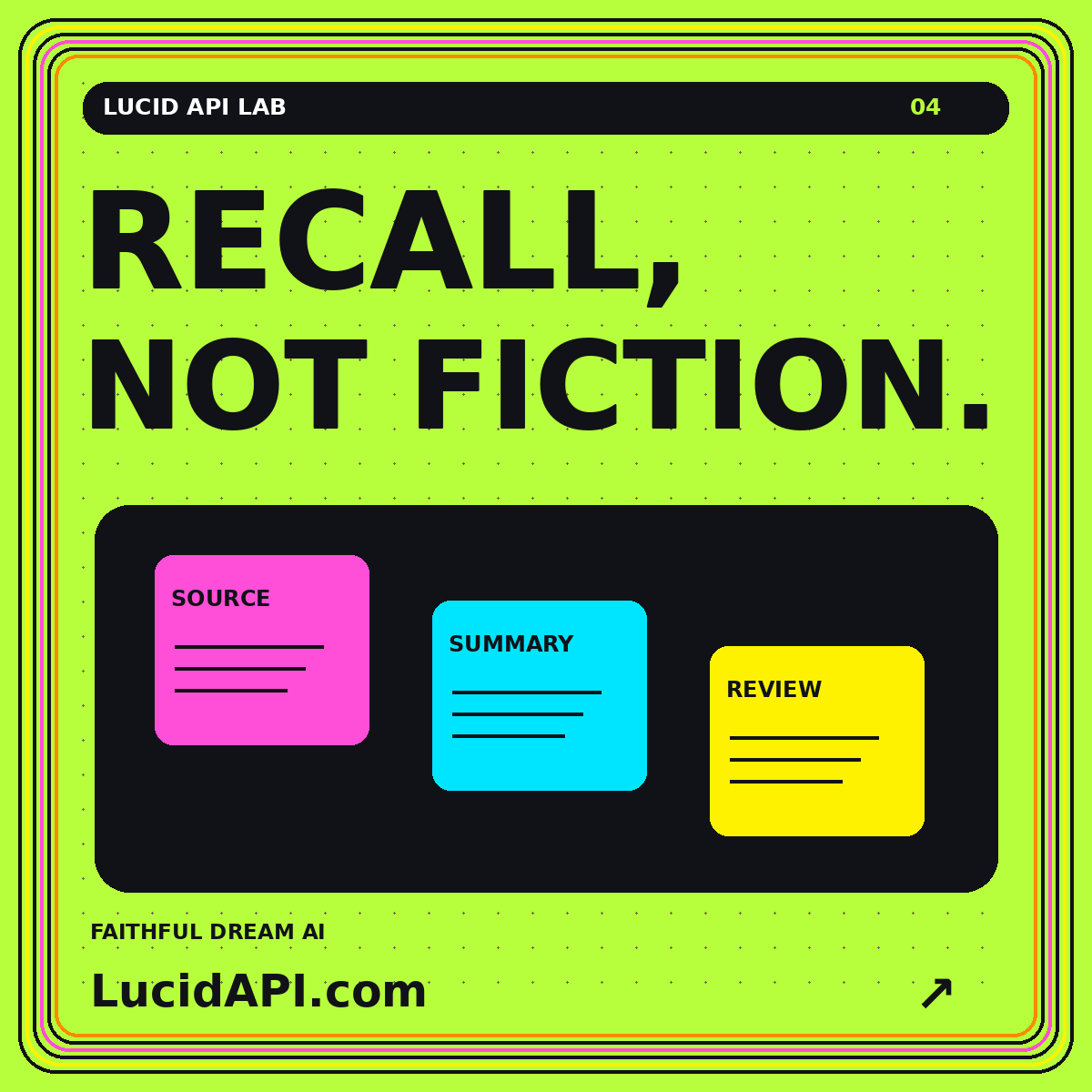
Start with faithful summaries to distinguish extraction, compression, reflection, and creative adaptation. Then read the research-events guide to separate cues, observed responses, timestamps, protocol context, and later annotations. The purpose is not to present software as direct access to a dream. It is to help a team name the information it actually has.
Review the API fields, interface labels, and exported files together. A carefully qualified record can become misleading when a dashboard shortens an estimate to a confident headline. Preserve origins, source revisions, and gaps wherever the information travels.
These articles use original design examples and clearly identified supporting sources. The proposed workflows concern data organization and optional reflection, not clinical assessment or instructions for sleep experimentation. When moving between a personal journal and research records, use separate permissions and explicit relationships rather than assuming a shared session makes every record equivalent.
Complete guides.
A connected line of inquiry.
An evidence-aware event model for teams documenting dream reports, experimental cues, observations, and uncertain classifications.
Separate extraction, summary, and reflection so generated text remains grounded in the account the user actually provided.